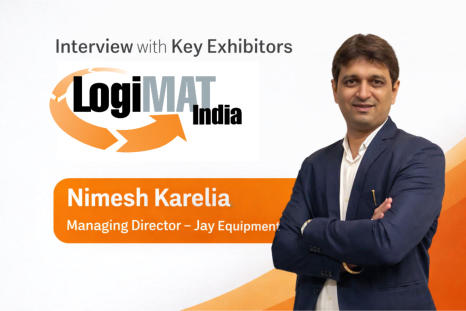
 Intralogistics is rapidly evolving as warehouses adapt to the demands of e-commerce, quick commerce, and increasingly complex supply chains. Modern facilities now require not just equipment, but intelligent, reliable, and customizable solutions that improve efficiency while ensuring safety and compliance.
In this interview, Nimesh Karelia, Managing Director of Jay Equipment, shares how the company has transformed from a traditional material-handling manufacturer into a full-scale intralogistics solutions provider. He discusses the importance of customization, safety-first engineering, value-driven manufacturing, and how Jay Equipment is supporting Indian warehouses in their journey toward smarter, future-ready operations—insights that will be showcased at LogiMAT India 2026.
Jay Equipment has decades of experience—how has the company adapted to modern intralogistics needs?
Originally focused on manufacturing basic material handling equipment, We expanded over the years into providing complete intralogistics solutions, from design and engineering to implementation and after-sales support— not just selling products but consulting, planning and optimizing workflows for warehouses and manufacturing plants. We invested in in-house design, R&D, and engineering capabilities, using advanced 3D software and high-end CNC machining to design and validate equipment tailored for specific intralogistics requirements. This ensures solutions match both global standards and client needs for efficiency and safety. Our products and processes are ISO-certified, aligning with international quality, environmental, and safety standards — essential for modern intralogistics environments that demand reliability, traceability, and compliance. For any kind of logistics systems , we provide consultation, site analysis, and turnkey intralogistics project planning, optimizing space usage, inventory flow, pick accuracy, and operational costs — a clear shift toward smart intralogistics design. We Understand that modern intralogistics isn’t only about installation but uptime, the company built strong after-sales, preventive maintenance, and service networks, helping customers minimise downtime and extend equipment life.
What products and solutions will you showcase at LogiMAT India 2026?
At our booth no. C02A in Hall 04, We will be presenting our latest range of material-handling and intralogistics equipment suitbale for modern warehouse and industrial needs — focusing on performance, durability, and efficiency in internal logistics:
Visitors can experience the Live Products Demo of JAY Electric Stackers, JAY Electric Pallet Trucks, JAY VRC Hydraulic Lifts, JAY Mini Electric Forklifts, JAY Electric Forklifts and many more
How are storage and handling requirements changing in Indian warehouses?
Storage and handling requirements in Indian warehouses are undergoing significant change as supply chains evolve, driven by shifts in demand patterns, technology adoption, infrastructure development, and business models. From Basic Storage to Fulfillment-Centric Warehouses, Rapid Adoption of Automation & Smart Technologies
Focus on Space Utilisation and Vertical Storage & Modern Material Handling Equipments.
4. What role does customization play in your project executions?*
Customization plays a central role in how Jay Equipment executes projects—it’s one of the company’s key differentiators in intralogistics and material-handling solutions. We design Solutions around the customer’s operation, providing tailor-made equipment configurations, Industry-specific adaptations, In-house engineering for faster customization and Better ROI and long-term performance, Customization is not an add-on at Jay Equipment—it’s built into the project execution philosophy. By tailoring equipment and solutions to real-world operating conditions, the company helps customers achieve efficient, safe, and future-ready intralogistics operations.
*5. How do you ensure safety and compliance in material handling systems?*
Jay Equipment ensures safety and compliance in material-handling systems by embedding them into every stage of the project lifecycle—from design to long-term operation We mainly focus on Safety-first engineering and design, Compliance with recognised standards, Use of certified components and controlled manufacturing, Built-in equipment safety features, Testing, inspection, and commissioning, Operator training and documentation, Preventive maintenance and lifecycle safety.
*6. How has e-commerce influenced demand for your solutions?*
E‑commerce and quick commerce have compressed delivery times and pushed customers to demand faster, safer, and more compact material handling solutions. This has sharply increased demand for our electric pallet trucks, order pickers, dock levelers, VRCs, and automated truck loading conveyors that support high‑velocity, 24x7 operations in fulfilment centres.
*7. What challenges do customers face when upgrading legacy warehouses?*
Most legacy warehouses struggle with low clear heights, narrow aisles, manual handling, and unplanned expansions that make traditional equipment inefficient or unsafe. We address this with site‑specific engineering—retrofittable VRCs, multi‑directional forklifts, slim electric stackers, and modular conveyors—so customers can modernise step by step without halting operations
How do you balance cost efficiency with performance and durability?*
Being Made in India products Jay Equipment balances cost efficiency with performance and durability by taking a value-engineering approach—optimising design, manufacturing, and lifecycle costs rather than just reducing upfront price. With in-house design and manufacturing, we Reduces dependency on expensive imports, Controls material selection and fabrication quality, Optimises designs for manufacturability and our designs prioritise easy maintenance and readily available spares, which Reduces service costs, Shortens repair time, Extends usable equipment life.

Comments (0)
Login to join the conversation
Login / RegisterNo comments yet. Be the first to comment!